
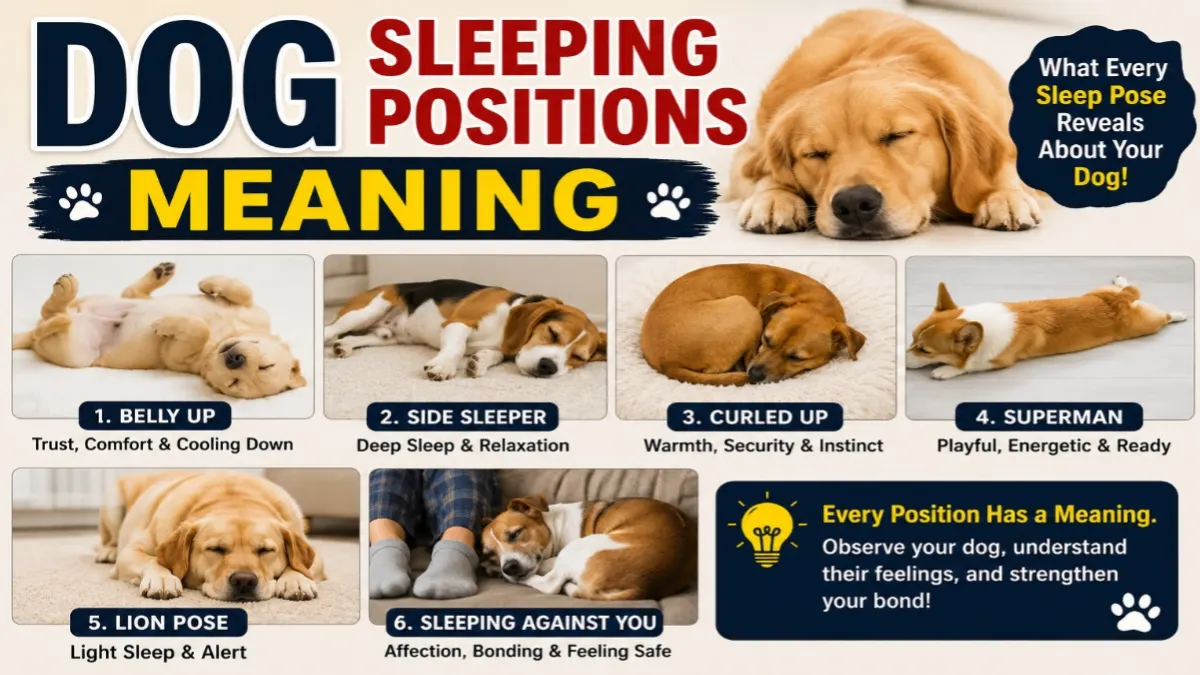

Have you ever looked at your sleeping dog and wondered what their favorite sleeping position actually means?
One night they may be stretched out on their back with all four legs in the air. The next morning, they’re curled into a tiny ball. Sometimes they sleep like a lion guarding the house, while puppies often flop into the famous “Superman” pose.
If you’ve ever searched “Dog Sleeping Positions Meaning,” you’re not alone.
Many dog owners are curious about what these sleeping positions reveal about their pet’s emotions, comfort level, and overall health.
The truth is that dog sleeping positions can tell you much more than most people realize. A dog’s sleeping posture often reflects how safe they feel, how warm or cool they are, their energy level, and sometimes even early signs of discomfort.
Of course, no single sleeping position can diagnose a medical condition. Veterinarians recommend looking at your dog’s overall dog body language, appetite, activity level, and daily routine rather than judging one behavior by itself.
In this guide, you’ll learn the 8 most common dog sleeping positions, what each one usually means, when they’re completely normal, and when a change in dog sleeping behavior may be worth discussing with your veterinarian.
Why Your Dog’s Sleeping Position Matters
Dogs spend around 12–14 hours sleeping each day, while puppies and senior dogs often sleep even longer.
That gives them plenty of opportunities to switch between different sleeping positions depending on how they feel.
Unlike humans, dogs don’t choose a sleeping posture simply because it’s comfortable.
Their position is often influenced by:
- Body temperature
- Sense of security
- Energy level
- Instincts inherited from wild ancestors
- Muscle relaxation
- Surrounding environment
That’s why observing dog sleeping behavior over time can help you understand your pet a little better.
A relaxed dog that changes positions naturally throughout the night is usually a happy and healthy dog.
1. Sleeping on Their Back (The Belly-Up Position)
One of the most recognizable dog sleeping positions is lying flat on the back with the belly exposed and all four legs pointing upward.
Many owners laugh when they see it because it looks awkward.
For dogs, however, it’s one of the strongest signs of trust.
The belly contains many of a dog’s most sensitive organs.
In the wild, exposing this area would leave them vulnerable.
That’s why most dogs only sleep this way when they feel completely safe.
If your dog regularly sleeps on their back, it’s usually a good sign that they trust both you and their environment.
This position also helps cool the body.
Dogs don’t sweat like humans.
They mainly release heat through their paw pads and by panting.
Because the belly has thinner fur, exposing it to cooler air helps reduce body temperature, especially during warm weather.
Signs this position is completely normal
- Loose, relaxed legs
- Calm breathing
- Comfortable sleeping environment
- Waking up happy and energetic
Many owners asking why does my dog sleep on its back are simply seeing a relaxed, confident dog enjoying a comfortable nap.
Also Read
Want to understand even more of your dog’s everyday behavior?
Read our complete guide on Why Do Dogs Stare at You While You Sleep, where we explain how dogs use body language, routines, and protective instincts to communicate with their owners.
2. Sleeping on Their Side (The Side Sleeper)
If your dog stretches out on one side with all four legs relaxed, you’re looking at one of the healthiest and most common dog sleeping positions.
Veterinary behavior experts generally consider this a sign that your dog feels comfortable, secure, and completely at ease in their surroundings.
Dogs in this position often enter their deepest stages of sleep, including REM (Rapid Eye Movement) sleep.
This is the stage where dreaming happens.
If you’ve ever noticed your dog twitching their paws, softly barking, moving their ears, or wagging their tail while asleep, they’re most likely dreaming.
Although researchers can’t say exactly what dogs dream about, studies suggest they may replay familiar experiences like playing, walking, chasing toys, or spending time with their favorite people.
A side-sleeping dog usually isn’t worried about nearby dangers.
Instead, they’re allowing their muscles to fully relax, which only happens when they feel safe.
Common signs of a relaxed side sleeper
- Slow, steady breathing
- Loose muscles
- Gentle twitching during dreams
- Easy to wake but quickly falls asleep again
- Calm behavior after waking
This type of dog sleeping behavior is especially common after long walks, active play sessions, or mentally stimulating activities.
3. Curled Up Like a Donut (The Donut Position)
Another extremely common dog sleeping position is curling into a tight ball with the nose tucked close to the tail.
Many owners call this the “donut position.”
Although it looks adorable, this posture comes from survival instincts that dogs inherited from their wild ancestors.
Wild dogs and wolves often slept this way because it helped them conserve body heat while protecting their chest, stomach, and other vital organs.
Even though your dog now sleeps safely inside your home, those instincts haven’t completely disappeared.
Dogs may choose this position when:
- The room feels cool
- They’re sleeping somewhere unfamiliar
- They’re taking a light nap
- They simply find it comfortable
A curled sleeping position doesn’t automatically mean your dog feels anxious.
Many perfectly happy dogs naturally prefer sleeping this way.
However, if a normally relaxed dog suddenly starts sleeping curled up all the time after moving homes or experiencing a stressful event, it may simply mean they’re adjusting to a new environment.
What this sleeping position usually means
Observation Possible Meaning Curled into a loose ball Comfortable and warm Curled tightly in cold weather Conserving body heat Curled up in a new place Natural caution while adjusting Relaxed after waking Completely normal behavior
4. The Superman Position
One of the funniest dog sleeping positions is commonly called the “Superman.”
In this pose, your dog lies on their stomach with both front legs stretched straight ahead and both back legs extended behind them.
It almost looks like they’re flying through the air.
This position is especially popular among puppies, young dogs, and energetic breeds.
Unlike deep sleeping positions, the Superman pose allows dogs to jump up almost instantly.
Instead of settling into a long sleep, they’re usually taking a short nap while staying ready for action.
Many playful dogs choose this position after running around the house or playing outside.
They’re resting—but only temporarily.
The moment you pick up a leash, shake a treat bag, or call their name, they’ll likely be back on their feet within seconds.
Dogs most likely to use this position
- Puppies
- Labrador Retrievers
- Golden Retrievers
- Border Collies
- Australian Shepherds
- Other active working breeds
This dog sleeping behavior simply reflects high energy levels and a playful personality.
There’s usually nothing unusual or concerning about it.
Helpful Tip
A healthy dog doesn’t always sleep in the same position every day.
It’s completely normal for your dog to switch between several dog sleeping positions depending on the weather, comfort level, mood, and time of day.
In the next section, we’ll look at two more common sleeping styles—including the famous Lion Pose and why some dogs insist on sleeping pressed against their owners.
What Your Dog’s Sleeping Position Says About Their Personality and Health
Not every dog sleeps the same way every night.
Sometimes they stretch out across the floor. Other times they curl into a tight ball or rest lightly with their head on their paws.
These changes are completely normal.
A dog’s sleeping position often depends on how safe they feel, the room temperature, their age, energy level, and even how deeply they plan to sleep.
Understanding dog sleeping positions meaning becomes much easier when you look at the whole picture instead of one position alone.
5. The Lion Pose (Sphinx Position)
One of the most elegant dog sleeping positions is known as the Lion Pose.
In this position, your dog lies on their stomach with their front paws stretched forward while their head rests gently on top.
They look peaceful—but they’re usually not in deep sleep.
This position allows dogs to relax while staying ready to respond instantly if they hear a familiar sound.
You’ll often notice this after a walk, while the family watches television, or when your dog wants to stay close without fully falling asleep.
Signs this position usually means:
- Light sleep instead of deep sleep
- Your dog feels comfortable but alert
- They’re resting while keeping an eye on the surroundings
- They can wake up immediately if needed
Many family dogs spend a large part of the day resting this way.
It’s a healthy and completely normal part of dog sleep behavior.
6. Sleeping Against You (The Cuddler Position)
Does your dog sleep with their back pressed against your legs?
Do they curl up beside you on the couch or bed?
Many owners wonder why their dog insists on touching them while sleeping.
The answer is simple.
Dogs are social animals.
In the wild, wolves sleep close together for warmth, protection, and comfort.
That instinct still exists today.
When your dog chooses to sleep against you, they’re saying:
- “I trust you.”
- “I feel safe here.”
- “You’re part of my family.”
This is one of the strongest signs of emotional bonding.
It doesn’t mean your dog is overly dependent.
In most cases, it simply reflects a secure attachment between pet and owner.
If your dog also shows relaxed ears, soft breathing, and calm dog body language, there’s no reason for concern.
When a Sleeping Position May Signal a Problem
Most sleeping positions are perfectly normal.
However, some unusual behaviors deserve attention—especially if they appear suddenly.
Contact your veterinarian if your dog regularly shows signs such as:
- Pressing their head against walls while resting
- Heavy panting during sleep without heat or exercise
- Difficulty standing after waking up
- Crying or showing signs of pain while lying down
- Sleeping much more than usual together with loss of appetite
- Sudden confusion, especially in senior dogs
A single unusual nap isn’t usually an emergency.
But if the behavior continues or comes with other symptoms, it’s always better to have your dog examined.
According to veterinary experts, changes in dog sleep behavior can sometimes be one of several early signs of illness, pain, or age-related cognitive changes.
Quick Checklist
If your dog is sleeping comfortably, ask yourself:
- Are they breathing normally?
- Do they wake up easily?
- Are they eating and drinking as usual?
- Are they active during the day?
- Does their sleeping position change naturally?
If the answer is “yes” to all of these, your dog’s sleeping habits are most likely completely healthy.
Quick Summary: Dog Sleeping Positions Meaning
If you’re wondering what different dog sleeping positions meaning actually tell you, here’s a simple guide.Sleeping PositionWhat It Usually MeansShould You Worry? Belly Up (Crazy Legs) Complete trust, comfort, cooling down No Side Sleeper Deep, restful sleep and total relaxation No Curled Up (Donut) Conserving body heat or natural instinct No Superman Short naps, playful personality, ready to move No Lion Pose Light sleep while staying alert No Sleeping Against You Affection, bonding, and feeling secure No Head Pressing Possible neurological problem Yes – Contact a veterinarian Heavy Panting During Sleep May indicate pain, overheating, or illness Yes – If it happens repeatedly
Conclusion: Dog Sleeping Positions Meaning Explained
Understanding dog sleeping positions meaning is one of the easiest ways to learn how your dog feels without hearing a single bark.
Whether your dog sleeps belly-up, curls into a donut, stretches out like Superman, or cuddles beside you, each position tells a small part of their story.
Most sleeping positions simply show that your dog feels safe, comfortable, and loved.
Instead of focusing on one sleeping pose, pay attention to your dog’s overall dog body language, daily routine, appetite, and energy level. Looking at all these signs together gives a much more accurate picture of their health and emotional well-being.
If you ever notice sudden changes in dog sleep behavior, especially when they’re accompanied by pain, confusion, heavy panting, or loss of appetite, it’s always best to consult your veterinarian.
The more you understand your dog’s everyday habits, the stronger your bond becomes—and that’s one of the greatest rewards of being a responsible pet owner.
Also Read: If your dog enjoys staying close while you rest, check out our guide on Why Does My Dog Lick My Feet After a Shower? to learn how licking, scent, and bonding behaviors help dogs communicate with the people they love.
Learn more about normal dog sleeping habits and behavior from the American Kennel Club (AKC): https://www.akc.org
Frequently Asked Questions (FAQ)
What is the most common dog sleeping position?
The side sleeping position is one of the most common. It usually means your dog feels safe, relaxed, and comfortable enough to enjoy deep sleep.
Why does my dog sleep on its back with its legs in the air?
This position usually shows complete trust and comfort. Dogs also sleep this way to help cool down by exposing their belly.
Is it normal for dogs to curl up while sleeping?
Yes. Curling into a ball is a natural instinct that helps dogs stay warm and protect their vital organs. It’s completely normal.
Why does my dog sleep pressed against me?
Dogs often sleep close to their owners because they feel safe, trust them, and enjoy the comfort of being near their favorite person.
When should I worry about my dog’s sleeping behavior?
If your dog suddenly develops unusual sleeping habits along with heavy panting, confusion, pain, loss of appetite, or difficulty walking, consult your veterinarian.
Can a dog’s sleeping position indicate health problems?
Most sleeping positions are normal, but sudden changes combined with other symptoms may signal illness, pain, or age-related conditions that require veterinary attention.