
Have you ever looked over at your dog while watching TV or working on your laptop, only to find them quietly licking the same paw over and over again?
At first, it doesn’t seem unusual. Dogs naturally groom themselves, and a little paw licking after a walk or before bedtime is completely normal. But when your dog keeps licking, chewing, or nibbling at their paws throughout the day, it’s often their way of telling you that something isn’t right.
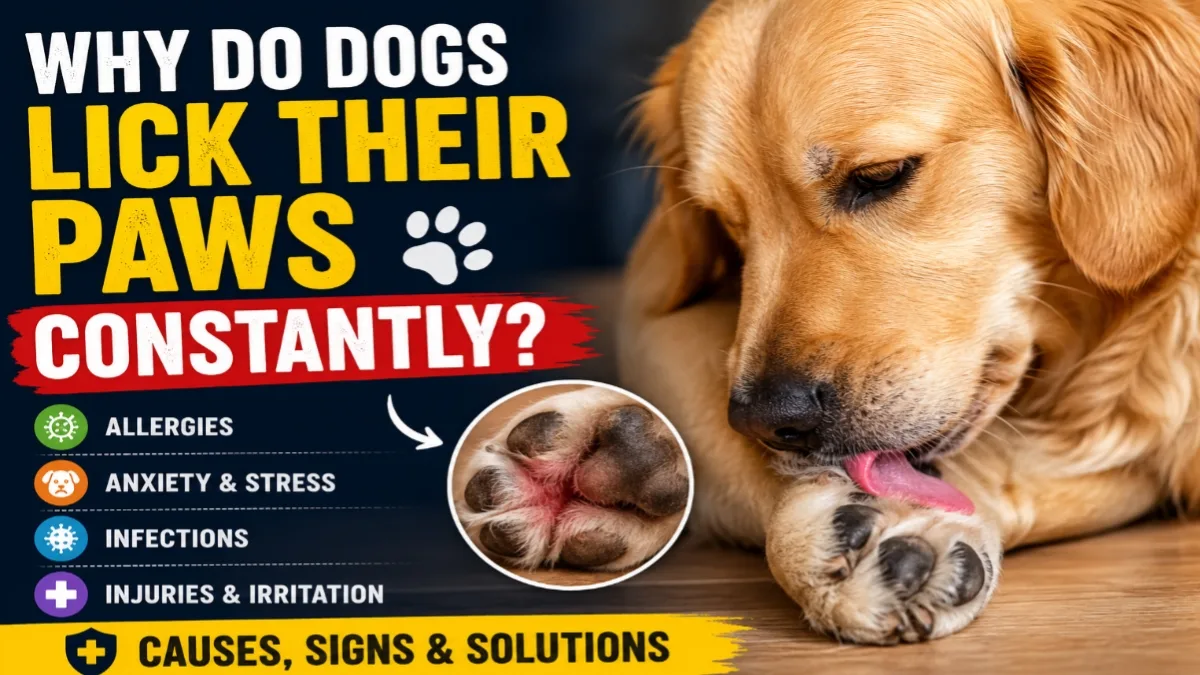
Unlike humans, dogs can’t point to the exact spot that hurts or explain what’s bothering them. Instead, they communicate through their behavior. Persistent paw licking is one of the most common signals veterinarians and canine behavior experts pay attention to because it can be linked to allergies, skin irritation, injuries, stress, boredom, or even chronic anxiety.
The tricky part is that the behavior usually starts very quietly. A dog may lick a paw for just a few minutes each day. Over time, that harmless habit can become excessive, leading to red skin, hair loss, swelling, infections, and sometimes open sores.
The good news is that paw licking isn’t a disease itself—it’s a symptom. Once you understand what’s causing it, finding the right solution becomes much easier.
In this guide, you’ll learn the most common medical and behavioral reasons why dogs constantly lick their paws, how to recognize the warning signs, what you can safely do at home, and when it’s time to schedule a visit with your veterinarian.
Common Physical Reasons Dogs Lick Their Paws
In most cases, excessive paw licking starts because something is making your dog’s feet uncomfortable.
Sometimes it’s a tiny thorn hidden between the paw pads. Other times it’s seasonal allergies, dry skin, or irritation caused by chemicals on the ground. Since dogs can’t scratch the bottoms of their paws very well, licking becomes their natural way of trying to relieve the discomfort.
That’s why the first thing experienced veterinarians usually recommend is checking the paws carefully before assuming it’s a behavioral problem.
Allergies Are One of the Biggest Causes
Environmental allergies are among the most common reasons dogs repeatedly lick their paws.
Grass pollen, dust mites, mold, lawn chemicals, and even certain cleaning products can irritate the sensitive skin between the toes. After every walk, these allergens stick to the paws, and the itching often becomes worse once your dog comes back inside.
Food allergies can create similar symptoms. Some dogs react to ingredients like chicken, beef, dairy, wheat, or soy, causing itchy skin that often affects the paws first.
If your dog constantly licks all four paws, especially during certain seasons, allergies are one of the first possibilities worth considering.
also read: Why Do Dogs Zoom After a Bath? 8 Surprising Reasons Behind Post-Bath Zoomies
Check for Small Injuries
Sometimes the answer is surprisingly simple.
If your dog suddenly starts licking only one paw, inspect it carefully under good lighting.
A tiny thorn, grass seed, splinter, cracked paw pad, insect sting, or even a small cut can make every step uncomfortable. Dogs instinctively lick the painful area because saliva provides temporary relief, even though excessive licking usually delays proper healing.
If you notice swelling, bleeding, limping, or something stuck between the toes, it’s best to avoid pulling it out unless it’s easy to remove safely. Deep wounds should always be examined by a veterinarian.
Skin Infections Can Make the Problem Worse
Constant moisture creates the perfect environment for bacteria and yeast.
Ironically, a dog may begin licking because of mild irritation, but the repeated licking keeps the skin wet. Over time, bacteria or yeast multiply rapidly, causing even more itching, redness, odor, and inflammation.
- This creates a frustrating cycle.
- The infection causes itching.
- The dog licks to stop the itching.
- The licking makes the infection worse.
Without treatment, the cycle often continues until the skin becomes raw and painful.
Could It Be Stress, Anxiety, or Simply Boredom?
Not every dog licks its paws because of a physical problem. Sometimes, the paws aren’t the real issue at all.
Dogs experience emotions much like we do. They can feel lonely, frustrated, anxious, or mentally under-stimulated. When they don’t know how to cope with those feelings, they often develop repetitive behaviors that help them calm themselves down.
Paw licking is one of the most common examples.
Bored Dogs Often Create Their Own Habits
Imagine spending an entire day with nothing to do.
No walk.
No toys.
No interaction.
No mental challenge.
Many dogs live exactly like this while their owners are at work.
Eventually, they begin looking for something—anything—to occupy themselves. Repeated licking releases small amounts of endorphins, chemicals that help the brain feel calmer for a short time. What starts as a harmless habit can slowly become part of the dog’s daily routine.
You’ll usually notice this kind of licking during quiet moments, such as late evenings, while you’re watching television, or whenever your dog has been inactive for several hours.
Dogs that receive regular exercise, puzzle toys, sniffing games, and daily training sessions are generally much less likely to develop boredom-related paw licking.
Anxiety Can Turn Into Compulsive Paw Licking
Some dogs struggle with stress far more than others.
A new home, loud noises, fireworks, thunderstorms, separation from their owner, or changes in daily routine can all increase anxiety levels.
Instead of barking or acting aggressively, many anxious dogs turn inward.
They repeatedly lick the same paw because the repetitive motion helps them feel temporarily calmer.
Over weeks or months, this behavior can become compulsive. Even after the original cause disappears, the dog may continue licking simply because it has become an automatic coping mechanism.
If your dog mostly licks its paws when left alone, after stressful situations, or during loud noises, emotional stress may be playing a bigger role than a medical condition.
Watch Your Dog’s Body Language
The way your dog behaves while licking often gives valuable clues.
A relaxed dog that occasionally cleans its paws after a muddy walk is usually showing normal grooming behavior.
But if your dog keeps returning to the same paw, seems restless, pants without exercise, avoids eye contact, whines, or struggles to settle down, there’s a good chance the licking is connected to stress or discomfort rather than cleanliness.
Looking at the whole picture—not just the licking itself—is often the fastest way to understand what’s really happening.
What Can You Do to Stop Your Dog From Licking Its Paws?
The right solution depends entirely on what’s causing the behavior. There’s no single treatment that works for every dog because excessive paw licking is a symptom, not the problem itself.
The first step is to identify the trigger instead of simply trying to stop the licking.
Keep the Paws Clean After Every Walk
A simple habit can prevent many paw problems before they begin.
After every walk, wipe your dog’s paws with a damp cloth or rinse them with clean, lukewarm water. This removes pollen, dirt, road salt, fertilizers, and other irritants that may stick between the paw pads.
Make sure you dry the paws thoroughly afterward. Moisture trapped between the toes creates the perfect environment for yeast and bacterial infections.
For dogs with seasonal allergies, this small routine often makes a noticeable difference.
Give Your Dog More Mental Stimulation
Many dogs don’t actually need more sleep—they need more things to do.
Interactive puzzle toys, sniffing games, food-dispensing toys, short training sessions, and daily walks keep their brain engaged. Mental exercise is just as important as physical exercise.
If your dog only licks its paws when bored, increasing daily enrichment can gradually reduce the behavior without any medication.
Even spending 15–20 minutes playing together each day can help redirect your dog’s attention toward healthier activities.
Avoid Human Creams Unless Your Vet Recommends Them
Many owners apply human moisturizers or medicated creams to irritated paws without realizing they may not be safe for dogs.
Dogs naturally lick anything applied to their feet. Some ingredients found in human skincare products can cause stomach upset or even toxicity if swallowed.
If your dog’s paws look red, swollen, cracked, or infected, it’s always safer to use products specifically recommended by your veterinarian.
When Should You See a Veterinarian?
Occasional paw licking is perfectly normal.
However, you shouldn’t ignore the behavior if it becomes frequent or intense.
Arrange a veterinary examination if you notice any of these warning signs:
| Symptom | Why It Matters |
|---|---|
| Licking the same paw every day | May indicate pain or injury |
| Red, swollen, or bleeding skin | Possible infection or allergy |
| Limping while walking | Could suggest a foreign object or joint problem |
| Bad smell coming from the paws | Often caused by yeast or bacterial infection |
| Hair loss around the toes | Usually a sign of chronic licking |
| Licking continues for several weeks | Needs professional diagnosis |
Early treatment is much easier than dealing with a severe skin infection later. A veterinarian can determine whether the cause is allergies, parasites, infection, pain, or anxiety and recommend the most appropriate treatment.
Quick Guide: What Your Dog’s Paw Licking May Be Trying to Tell You
Sometimes, simply observing when and how your dog licks its paws can help you understand the possible reason behind the behavior.
| Paw Licking Pattern | Possible Cause | What You Should Do |
|---|---|---|
| Licks one paw repeatedly | Injury, thorn, cut, or something stuck between the toes | Carefully inspect the paw and contact your veterinarian if needed |
| Licks all four paws after every walk | Environmental allergies, pollen, grass, or chemicals | Wash and dry the paws after outdoor walks |
| Licks mostly at night or while resting | Boredom, stress, or anxiety | Increase daily exercise, playtime, and mental enrichment |
| Red, swollen, or itchy paws | Allergies or skin infection | Schedule a veterinary examination |
| Constant licking with a bad smell | Yeast or bacterial infection | Veterinary treatment is recommended |
| Licks occasionally after cleaning | Normal grooming behavior | Usually nothing to worry about |
Conclusion
Why do dogs lick their paws constantly? In most cases, it’s your dog’s way of telling you that something isn’t quite right. The cause could be as simple as dirt trapped between the paw pads, seasonal allergies, or dry skin. In other situations, it may point to boredom, anxiety, pain, or an underlying medical condition that needs attention.
The key is to look beyond the licking itself. Notice when it happens, which paw is affected, and whether your dog shows other signs like redness, limping, swelling, or changes in behavior. These small details often reveal the real reason.
As a responsible pet parent, don’t ignore persistent paw licking. A little extra observation, proper paw care, regular exercise, and timely veterinary advice can prevent small problems from turning into serious health issues. When you understand what your dog is trying to communicate, you can keep them healthier, happier, and far more comfortable every day.
FAQ Also Asked
Why does my dog keep licking its paws all the time?
Dogs may lick their paws because of allergies, skin irritation, injuries, infections, boredom, or anxiety. If the licking becomes frequent or causes redness, it’s best to have your dog examined by a veterinarian.
Is it normal for dogs to lick their paws every day?
Occasional paw licking is a normal grooming behavior. However, excessive daily licking, especially of the same paw, may indicate an underlying health or behavioral problem.
Can anxiety make a dog lick its paws?
Yes. Stress, separation anxiety, and boredom can cause repetitive paw licking. This behavior helps some dogs temporarily calm themselves but may become a habit over time.
Should I stop my dog from licking its paws?
If your dog only licks its paws occasionally, there’s usually no need to stop it. But if the licking is constant, causes skin damage, or is accompanied by limping or swelling, you should identify the underlying cause and consult your veterinarian.
When should I worry about my dog’s paw licking?
You should seek veterinary advice if your dog’s paws become red, swollen, bleed, smell bad, lose hair, or if the licking continues for several days without improvement.