
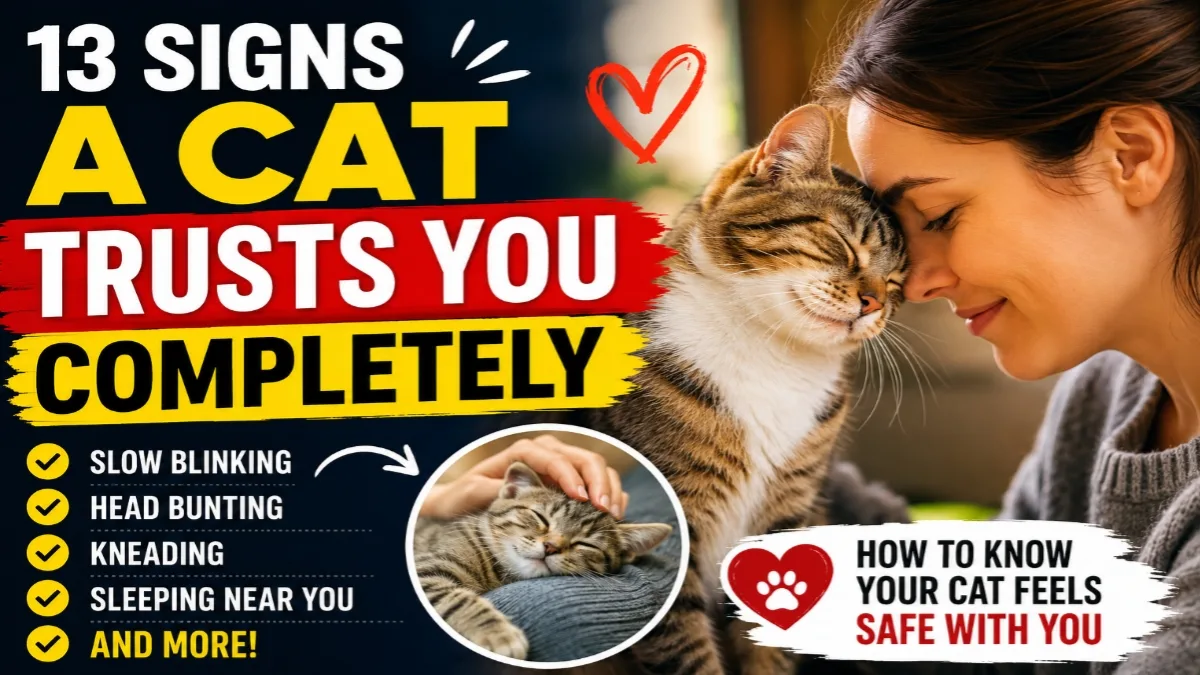

Cats have a reputation for being independent, mysterious, and sometimes even emotionally distant. Unlike dogs, they don’t usually wag their tails, jump into your arms, or openly seek attention from everyone they meet. Because of this, many people mistakenly believe that cats don’t form deep emotional bonds with humans. In reality, nothing could be further from the truth.
Cats express love and trust in much quieter ways. Their body language is subtle, their communication is delicate, and many of the signs they give are easy to miss if you don’t understand feline psychology. Once you learn how to read these small behaviors, you’ll realize that your cat may be telling you every day just how much they trust you.
Earning a cat’s trust isn’t something that happens overnight. Unlike many other pets, cats carefully observe people before deciding whether they feel safe around them. They remember how you handle them, whether you respect their personal space, how you respond when they’re frightened, and whether your presence makes them feel calm or stressed. Every positive interaction slowly builds confidence until your cat begins to see you as part of its safe world.
If you’ve ever wondered, “Does my cat trust me?”, you’re not alone. It’s one of the most searched questions among cat owners in the United States, Canada, and the United Kingdom. Fortunately, cats leave behind plenty of clues—you simply need to know what to look for.
In this detailed guide, we’ll explore the most reliable signs a cat trusts you completely, supported by feline behavior research and expert understanding of cat body language. Some of these behaviors may seem ordinary at first, but together they reveal an incredibly strong emotional bond between you and your cat.
Head Bunting: One of the Strongest Signs Your Cat Trusts You
If your cat gently presses its forehead against you or rubs its cheeks on your hands, legs, or face, it isn’t just being affectionate. This behavior is known as head bunting, and it’s considered one of the clearest signs a cat trusts you completely.
Cats have scent glands around their cheeks, forehead, and chin that release pheromones unique to them. When they rub these areas against you, they’re leaving their scent behind. To another cat, this scent communicates familiarity, comfort, and safety. In simple terms, your cat is saying, “You belong with me, and I feel completely safe around you.”
Wild cats use this same behavior with trusted members of their social group. So when your indoor cat repeatedly head-butts you, it’s treating you like family rather than just the person who fills the food bowl.
Many cat parents instinctively pick their cat up after a head bunt, but that’s not always what the cat wants. A better response is to gently stroke your cat’s cheeks or forehead and allow them to remain in control of the interaction. Respecting their boundaries reinforces the trust they’ve already placed in you and helps strengthen your relationship even further.
Kneading (“Making Biscuits”) Means Your Cat Feels Completely Safe
Have you ever noticed your cat rhythmically pushing its front paws in and out while sitting on your lap, a blanket, or even your bed? Cat owners often call this adorable behavior “making biscuits.” While it may look funny, it’s actually one of the strongest signs a cat trusts you completely.
This behavior begins when kittens are only a few days old. While nursing, they gently press their mother’s belly with alternating paws to stimulate milk flow. During that time, they experience warmth, comfort, protection, and complete security. Those positive emotions become deeply connected with the kneading motion.
As adult cats grow older, they don’t forget that memory. Whenever they find themselves in a place where they feel calm, relaxed, and emotionally safe, many of them naturally start kneading again. If your cat chooses your lap instead of a random cushion, it means your presence reminds them of that same feeling of comfort and protection they experienced as kittens.
Some cats even purr, close their eyes, or slowly blink while kneading. These behaviors often appear together because they all indicate the same emotional state—a cat that feels safe enough to let its guard down. In other words, your cat isn’t just enjoying a soft blanket; it’s enjoying being close to someone it trusts.
Occasionally, kneading may come with gentle claws. Although it can be a little uncomfortable, avoid scolding your cat for it. Instead, place a soft blanket on your lap or carefully trim your cat’s nails if needed. Punishing this behavior can reduce your cat’s confidence, while calmly accepting it helps strengthen the bond between you.
The Slow Blink Is Your Cat’s Version of “I Trust You”
Among all forms of cat body language, the slow blink is perhaps the most meaningful. Many feline behavior experts even refer to it as a “cat kiss.” If your cat looks at you, slowly closes both eyes for a moment, and then gently opens them again, it’s giving you one of the highest compliments a cat can offer.
In the wild, closing your eyes around another animal is risky because it temporarily reduces awareness of danger. Cats only do this when they believe absolutely nothing bad will happen. That is why a slow blink is considered one of the clearest signs a cat trusts you completely.
Interestingly, this isn’t a one-way conversation. Research has shown that when humans slowly blink back at their cats, many cats respond positively by approaching more often and appearing more relaxed. It’s a simple but effective way to communicate in a language your cat naturally understands.
The next time your cat gives you a slow blink from across the room, don’t ignore it. Pause for a second, soften your expression, and slowly blink back. It may seem like a tiny gesture, but for your cat, it’s a quiet conversation built on trust, safety, and affection.
Showing Their Belly Is a Huge Sign of Trust—But Not Always an Invitation for Belly Rubs
One of the most misunderstood cat behaviors is when a cat rolls onto its back and exposes its belly. Many people immediately assume the cat wants a belly rub, only to end up with a playful bite or a quick swipe of the paws. In reality, exposing the belly has a much deeper meaning in feline psychology.
A cat’s stomach is the most vulnerable part of its body. It protects vital organs, and in the wild, exposing this area would leave a cat defenseless against predators. Because of that, cats only reveal their belly when they feel completely safe in their surroundings. If your cat regularly flops onto its back when you’re nearby, it’s one of the strongest signs a cat trusts you completely.
However, trust doesn’t always equal permission. Many cats show their belly simply because they’re relaxed, not because they want it touched. For some cats, unexpected belly rubs trigger a natural defensive instinct, even if they love you. That’s why it’s important to watch your cat’s body language before reaching out.
If your cat is lying on its back with loose muscles, relaxed ears, and soft eyes, it’s telling you that it feels secure in your presence. You don’t have to touch the belly to appreciate the moment. A gentle scratch under the chin, around the cheeks, or behind the ears is usually a much safer and more enjoyable choice.
Sleeping Near You Means Your Cat Sees You as Their Safe Place
Cats spend between 12 and 16 hours sleeping every day. During deep sleep, they become less aware of their surroundings, making them vulnerable to potential danger. That’s why where a cat chooses to sleep says a lot about how safe it feels.
If your cat regularly sleeps beside you, curls up near your feet, rests on your pillow, or even naps on your chest, it isn’t choosing that spot by accident. It’s choosing the place where it feels the most protected. Among all the signs a cat trusts you completely, sleeping close to you is one of the most meaningful because it requires your cat to lower its guard completely.
Some cats prefer sleeping just a few feet away instead of directly on top of you. That doesn’t mean they trust you any less. Every cat has a different personality and comfort level with physical contact. What matters is that your cat voluntarily chooses to rest near you instead of hiding in another room.
If your cat quietly follows you into the bedroom each night and settles nearby before falling asleep, take it as a compliment. It means your presence provides comfort, security, and peace of mind. In your cat’s world, you’ve become more than an owner—you’ve become part of their safe territory and daily routine.
A Tail Held High with a Curved Tip Shows Confidence and Happiness
A cat’s tail can reveal more about its emotions than almost any other part of its body. While dogs wag their tails to express excitement, cats use tail position to communicate trust, confidence, curiosity, and even uncertainty.
If your cat walks toward you with its tail held straight up and the tip slightly curved—almost like a question mark—it’s displaying one of the most positive forms of cat body language. This posture is widely recognized as one of the strongest signs a cat trusts you completely.
Kittens greet their mother this way, and adult cats use the same body language when approaching cats or humans they feel comfortable around. It isn’t simply a greeting—it’s a sign that your cat is happy to see you and expects a positive interaction.
You’ll often notice this behavior when you arrive home after work, enter a room, or call your cat’s name. Some cats even combine a raised tail with gentle chirping sounds or soft purrs, making the greeting even more affectionate.
On the other hand, if the tail is puffed up, tucked tightly underneath the body, or whipping rapidly from side to side, your cat may be frightened, overstimulated, or annoyed. Learning to recognize these differences helps you understand your cat’s emotional state much more accurately.
Grooming You Means Your Cat Considers You Family
Cats spend a large part of their day grooming themselves because cleanliness is important for both health and social bonding. However, when a cat starts licking your hands, fingers, hair, or even your face, the behavior goes far beyond simple grooming.
In feline social groups, cats groom individuals they deeply trust. This behavior, known as allogrooming, strengthens social bonds and reinforces the feeling of belonging within the group. When your cat grooms you, it’s treating you exactly the way it would treat another trusted cat.
Many owners assume their cat is simply tasting salty skin or reacting to lotion, but repeated grooming is often one of the clearest signs a cat trusts you completely. Your cat is expressing affection while also mixing its scent with yours, creating a shared family scent that provides comfort and familiarity.
Some cats groom gently for only a few seconds, while others may spend several minutes licking your hands or hair. Both behaviors are completely normal. The important point is that your cat has chosen to include you in its closest social circle.
If the grooming becomes excessive or starts turning into biting, simply redirect your cat with a toy instead of pushing it away harshly. Responding calmly helps preserve the trust you’ve worked so hard to build, while punishment can make some cats withdraw emotionally.
Your Cat Brings You “Gifts” Because It Trusts You
Many cat owners have experienced this surprising moment. Your cat suddenly walks into the house carrying a toy mouse, a feather, a sock, or, if it goes outdoors, even a real insect or small prey. While it may seem strange—or even unpleasant—this behavior is actually one of the strongest signs a cat trusts you completely.
In the wild, mother cats teach their kittens how to hunt by bringing prey back to them. Domestic cats still carry this instinct, even though they no longer need to hunt for survival. When your cat leaves a favorite toy at your feet or proudly carries something to you, it isn’t trying to upset you. It’s sharing something valuable with someone it considers part of its family.
Indoor cats usually replace prey with toys because that’s what they have available. If your cat repeatedly drops its favorite toy near you and waits for your reaction, it’s often inviting you to interact or showing that it feels comfortable sharing its “treasure” with you.
If your cat ever brings you a gift, avoid reacting with anger or punishment. Instead, calmly remove the object and reward your cat with gentle praise or a play session. Positive responses help strengthen the trust your cat has already built with you.
Your Cat Follows You Around the House
Does your cat quietly walk behind you from room to room without demanding attention? Many owners think their cat is simply curious, but in most cases, this behavior reflects a strong emotional attachment.
Cats don’t waste energy following people they don’t trust. If your cat chooses to leave a comfortable sleeping spot just to see where you’re going, it’s because your presence makes them feel secure. This behavior becomes even more noticeable when you’re cooking, working, or relaxing in another room.
Unlike dogs, cats usually don’t follow people because they’re waiting for commands. Instead, they simply enjoy being close to someone who makes them feel safe. Sometimes they’ll sit quietly nearby without asking for anything at all. That silent companionship is often one of the most genuine signs a cat trusts you completely.
Some cats even wait outside the bathroom door or greet you immediately when you wake up in the morning. These daily routines aren’t random habits—they’re small signs that your cat enjoys sharing its environment with you and considers you an important part of its life.
A cat that voluntarily chooses your company, even without food or treats involved, is showing a level of trust that takes months—or sometimes years—to build.
Your Cat Greets You at the Door Because You Matter to Them
Have you ever opened the front door after a long day only to find your cat waiting for you? Some cats run toward their owners with their tail held high, while others simply sit quietly near the entrance as if they’ve been expecting you. It may seem like a small daily habit, but in feline psychology, this greeting can reveal a surprisingly deep emotional connection.
Cats don’t usually spend their time waiting for people they don’t care about. If your cat regularly comes to the door when you arrive home, it has likely learned your routine and looks forward to your return. This is another one of the genuine signs a cat trusts you completely because your presence has become an important part of its daily life.
Some owners believe their cat is only excited because it’s time for food. While that can be true in certain situations, many cats continue greeting their owners even when food isn’t involved. They simply enjoy seeing the person they trust most.
You may also notice that your cat rubs against your legs, purrs softly, or follows you inside after greeting you. These behaviors often appear together and strengthen the message that your cat feels happy, secure, and emotionally connected to you.
Your Cat Purrs While Resting Beside You
Purring is one of the most recognizable sounds cats make, but it isn’t always just about happiness. Cats can purr when they’re nervous, recovering from injury, or even visiting the veterinarian. That’s why context is important.
If your cat climbs onto your lap, curls up beside you, relaxes its body, and begins purring with soft, half-closed eyes, it’s usually expressing comfort and emotional security. Combined with relaxed body language, purring becomes one of the clearest signs a cat trusts you completely.
Many researchers believe purring also helps cats calm themselves and strengthen social bonds. It’s a peaceful sound that often appears during moments of complete relaxation. Your cat is essentially saying, “I’m comfortable here, and I don’t feel the need to stay alert.”
Instead of interrupting the moment, gently stroke your cat’s head or cheeks if it enjoys being touched. Quiet interactions like these reinforce trust over time and help your cat continue associating your presence with safety and comfort.
Quick Cat Trust Guide
| Cat Behavior | What It Really Means |
|---|---|
| Head bunting or rubbing against you | Marks you as a trusted member of its family |
| Kneading on your lap | Feels completely safe and relaxed |
| Slow blinking | A feline way of saying “I trust you” |
| Showing the belly | Feels secure, though not always asking for belly rubs |
| Sleeping near you | Sees you as a safe place |
| Tail held high with a curved tip | Happy, confident, and excited to see you |
| Grooming your hands or hair | Considers you part of its social group |
| Bringing toys or gifts | Shares valuable possessions with someone it trusts |
| Following you around the house | Enjoys your company and feels emotionally connected |
| Greeting you at the door | Looks forward to seeing you every day |
| Relaxed purring beside you | Feels calm, secure, and comfortable in your presence |
Conclusion
Building trust with a cat is very different from earning the trust of most other pets. Cats don’t hand out their confidence easily, and every sign of affection they show has meaning behind it. From a gentle head bunt and slow blink to sleeping beside you or quietly following you around the house, each behavior reflects a growing bond built on patience, respect, and consistency.
If you’ve noticed several of these signs a cat trusts you completely, you’ve created something truly special. Your cat doesn’t simply recognize you as the person who provides food—it sees you as a source of safety, comfort, and companionship. Continue respecting your cat’s boundaries, understanding its body language, and spending quality time together. Trust is one of the greatest gifts a cat can give, and once it’s earned, it often lasts a lifetime.
Want to learn more about feline behaviour and how cats communicate with humans? Read this expert guide from International Cat Care
Faq
How do I know if my cat trusts me completely?
A cat that trusts you will usually show relaxed body language, slow blink at you, rub its head against you, sleep nearby, knead on your lap, or follow you around the house. These are some of the clearest signs a cat trusts you completely.
How long does it take for a cat to trust a new owner?
Some cats begin trusting a new owner within a few weeks, while shy or rescued cats may need several months. Patience, consistency, and respecting your cat’s boundaries are the keys to building trust.
Why does my cat slow blink at me?
A slow blink is often called a ‘cat kiss.’ It means your cat feels safe and relaxed around you. In feline psychology, slow blinking is one of the strongest signs of trust and affection.
Does sleeping next to me mean my cat trusts me?
Yes. Cats are most vulnerable while sleeping, so choosing to sleep beside you or on your bed usually means they feel completely safe and secure in your presence.
Can a cat lose trust in its owner?
Yes. Rough handling, punishment, or stressful experiences can damage your relationship. However, with gentle care, patience, and positive interactions, most cats can learn to trust again.