
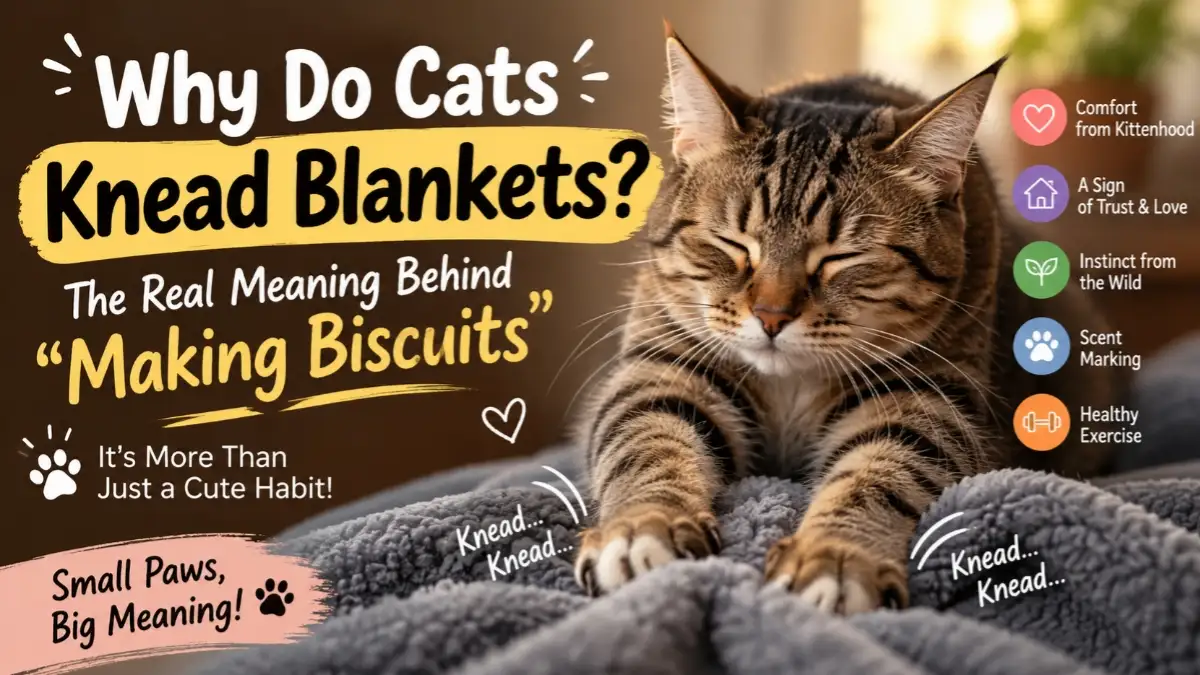

Few cat behaviors are as adorable as watching your cat rhythmically press its front paws into a soft blanket, pillow, or even your lap.
One paw moves forward, then the other, over and over again, almost as if your cat is kneading dough. This charming habit is so well known that cat owners in the United States, Canada, and the United Kingdom affectionately call it “making biscuits.”
During this routine, many cats also close their eyes halfway, begin purring softly, and appear completely relaxed. It’s one of the clearest signs that a cat feels calm and comfortable.
But have you ever wondered, why do cats knead blankets in the first place?
While it may look like a simple habit, kneading is actually deeply connected to feline development, instinct, and emotional well-being. Animal behavior researchers believe this behavior begins during the earliest days of a kitten’s life and often continues well into adulthood.
In this guide, you’ll discover the fascinating science behind why do cats knead blankets, what your cat is trying to communicate, and why this behavior is usually a positive sign of trust, comfort, and security.
Kneading Begins During Kittenhood
The most widely accepted explanation for kneading starts long before a cat becomes an adult.
When kittens are nursing, they instinctively press their tiny paws against their mother’s belly while drinking milk. This rhythmic movement helps stimulate milk flow and makes feeding easier.
Because nursing is associated with warmth, safety, and nourishment, the motion becomes linked with positive emotions from the very beginning of a cat’s life.
As cats grow older, they don’t forget this instinct.
Instead, many adult cats continue kneading whenever they feel especially relaxed or secure. Soft blankets, plush beds, warm laps, and cozy cushions can trigger those early memories, encouraging the same comforting behavior they learned as kittens.
This is one of the strongest explanations for why do cats knead blankets. The action isn’t random—it reflects a deep sense of comfort and emotional security that has remained with them since their earliest days.
Kneading Is Also a Powerful Sign of Trust and Affection
Many cats don’t just knead blankets—they choose their favorite person instead.
If your cat climbs onto your lap, gently presses its paws against your legs, or starts kneading your chest while purring, it’s usually expressing comfort rather than trying to hurt you.
Although those tiny claws can occasionally feel sharp, the behavior itself is typically a positive sign.
Cats reserve this level of relaxation for people they genuinely trust. By kneading while resting on you, your cat is showing that it feels completely safe in your presence.
This is another reason why do cats knead blankets and people. Both provide warmth, softness, and a feeling of security that reminds them of the comfort they experienced as kittens.
Some cats may even combine kneading with other affectionate behaviors, such as:
- Purring continuously.
- Slow blinking at you.
- Rubbing their head against your hand.
- Curling up and falling asleep immediately afterward.
Together, these behaviors indicate that your cat sees you as a trusted companion and feels emotionally secure around you.
For many cat owners, kneading is one of the sweetest ways a cat silently says, “I feel safe with you.”
Also Read : Does Your Cat Trust You Completely? 13 Clear Signs Every Cat Parent Should Know
Wild Instincts Still Influence Modern House Cats
Even the most pampered indoor cat still carries instincts inherited from its wild ancestors.
Long before cats lived in our homes, wild felines slept on grass, leaves, and other natural surfaces. Before lying down, they often pressed and pawed at the ground to create a safer, more comfortable resting place.
This behavior helped flatten vegetation, remove sharp objects, and prepare a soft spot for sleeping or caring for kittens.
Although your cat now has cozy beds and blankets, the instinct hasn’t disappeared.
That’s why many cats knead a blanket just before curling up for a nap. They’re unconsciously repeating a behavior that once helped their ancestors create a secure sleeping area.
Another fascinating explanation for why do cats knead blankets involves scent communication.
Cats have scent glands in the soft pads of their paws. Every time they knead a blanket, bed, or your lap, they leave behind tiny amounts of their unique scent.
Humans can’t detect these pheromones, but other cats can.
By leaving their scent behind, your cat is quietly marking that object as familiar and safe. It’s their natural way of saying, “This is my comfortable place.”
So when your cat repeatedly kneads the same blanket, it’s not only seeking comfort—it’s also reinforcing a space that feels secure and belongs to its trusted environment.
Kneading Is Healthy Exercise for Your Cat
Kneading isn’t just comforting—it also benefits your cat physically.
As your cat alternates its front paws, it stretches the muscles in its shoulders, legs, paws, and back. This gentle movement improves flexibility and helps keep the joints active, especially after a long nap.
Many cats naturally stretch before or after sleeping, and kneading is often part of the same routine.
You may also notice your cat extending its claws during kneading. This helps loosen the muscles in the paws and provides a mild workout for the toes and forelegs.
Should You Stop Your Cat From Kneading?
In most cases, no.
Kneading is a completely natural feline behavior and doesn’t need to be corrected. Instead, there are a few simple ways to make it more comfortable for both of you:
- Keep your cat’s nails trimmed. Shorter nails reduce accidental scratches when your cat kneads your lap.
- Place a thick blanket on your legs. If the pressure becomes uncomfortable, a folded blanket or cushion creates a protective layer without interrupting your cat’s routine.
- Avoid pushing your cat away suddenly. If you need to move, gently lift your cat or encourage it to knead a nearby blanket instead.
As long as the behavior isn’t excessive or accompanied by signs of illness, kneading is considered a healthy and positive part of normal feline behavior.
For most cats, it’s simply another way to relax, stretch, and enjoy feeling completely safe.
Conclusion
If you’ve ever wondered, why do cats knead blankets, the answer lies in a combination of early kittenhood memories, natural instincts, scent communication, and complete emotional comfort.
What looks like a simple paw movement is actually a behavior that has stayed with cats throughout their lives. Whether they’re remembering the security of nursing, preparing a cozy place to rest, marking a favorite blanket with their scent, or simply stretching their muscles, kneading serves several important purposes.
When your cat chooses to knead your lap or blanket while purring peacefully, it’s usually one of the strongest signs that it feels safe, relaxed, and deeply connected to you.
Rather than stopping this behavior, appreciate it as a unique expression of trust. With trimmed claws and a soft blanket nearby, both you and your cat can enjoy one of the sweetest bonding moments in the feline world.
Learn More About Cat Behavior
Want to understand your cat’s behavior even better? These trusted veterinary and feline organizations provide evidence-based information on kneading, feline communication, and cat care.
Recommended External Resources:
International Cat Care – https://icatcare.org
FAQ
Why do cats knead blankets before sleeping?
Cats often knead blankets before sleeping because it is an instinct passed down from their wild ancestors. The behavior helps them create a comfortable resting spot and makes them feel safe and relaxed.
Why does my cat knead me instead of a blanket?
When your cat kneads your lap or chest, it usually means it feels completely safe and trusts you. Many cats associate their favorite person with warmth, comfort, and security.
Is kneading a sign that my cat is happy?
Yes. In most cases, kneading is a positive behavior that shows your cat is calm, content, and emotionally comfortable. It is often accompanied by purring and slow blinking.
Should I stop my cat from kneading blankets?
No. Kneading is a normal feline behavior. Instead of stopping it, keep your cat’s nails trimmed and place a soft blanket on your lap if the claws become uncomfortable.
Why do cats knead with their claws out?
Cats may extend their claws while kneading because it helps stretch their paw muscles and allows them to leave scent from glands located in their paw pads, marking the area as familiar and safe.