
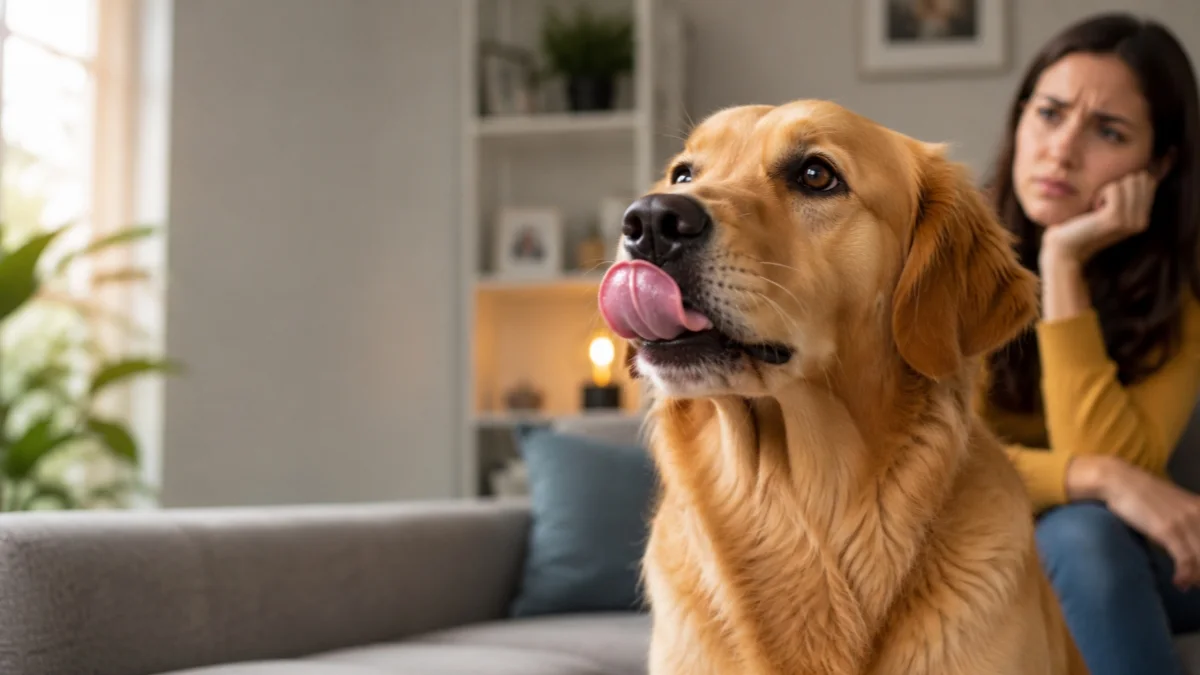

Have you ever looked at your dog and noticed them repeatedly sticking out their tongue to lick the air, even though there’s no food, toy, or treat nearby? At first, it might seem funny or harmless. Many pet owners assume it’s just one of those quirky things dogs do.
However, dog licking air repeatedly is a behavior that deserves closer attention. While an occasional air lick is usually nothing to worry about, frequent or persistent air licking can sometimes signal an underlying medical issue, emotional stress, or even a neurological condition.
Dogs can’t tell us when something feels wrong. Instead, they communicate through changes in their behavior. That’s why understanding why dogs lick the air repeatedly can help you recognize health problems before they become more serious.
Veterinarians and canine behavior specialists explain that this unusual habit may be linked to digestive discomfort, dental pain, anxiety, compulsive behavior, or certain neurological disorders. The key is to look at your dog’s body language and any other symptoms happening at the same time.
In this comprehensive guide, you’ll learn the most common causes of dog licking air repeatedly, how to tell the difference between normal and abnormal behavior, when you should contact your veterinarian, and what you can safely do at home to help your dog.
An Upset Stomach Is One of the Most Common Reasons
One of the leading causes of dog licking air repeatedly is nausea or stomach discomfort. Just like people, dogs can feel sick to their stomach, especially after eating something unusual, switching foods too quickly, or dealing with digestive irritation.
When a dog feels nauseous, the body naturally produces extra saliva. To cope with that uncomfortable sensation, many dogs repeatedly lick the air, swallow frequently, or smack their lips. These behaviors often happen together and may even appear shortly before vomiting.
If your dog is licking the air while also drooling, gulping, refusing food, eating grass, or looking restless, the digestive system is often the first place your veterinarian will investigate.
Sometimes the problem is temporary, such as mild indigestion after eating too fast. In other cases, repeated episodes of dog licking air repeatedly could point toward gastritis, inflammatory bowel disease, or another gastrointestinal condition that requires veterinary care.
If your dog frequently shows signs of nausea, vomiting, or dog licking air repeatedly, it is a good idea to read the Merck Veterinary Manual’s guide to gastrointestinal disorders in dogs for medically reviewed information before assuming it’s just a harmless habit.
Acid Reflux Can Also Trigger Air Licking
Many pet owners don’t realize that dogs can experience acid reflux, just like humans. When stomach acid travels back into the esophagus, it creates irritation and a burning sensation that dogs cannot explain.
Instead, they often respond by licking the air repeatedly, swallowing over and over, or licking their lips in an attempt to ease the discomfort.
Dogs suffering from acid reflux may show these behaviors more often early in the morning or several hours after eating. You may also notice them burping, eating grass, or acting uncomfortable after meals.
If dog licking air repeatedly becomes a daily pattern, especially around feeding time, acid reflux is one possible explanation that shouldn’t be ignored. Your veterinarian may recommend dietary changes, smaller meals, or further testing depending on your dog’s symptoms.
This is why it’s important to look at the entire picture instead of focusing only on the air-licking itself. The behavior is often a clue that something else is happening inside your dog’s body rather than a habit with no meaning.
also read: Why Does My Dog Sigh? Understanding Dog Sighing Meaning
Oral Pain or Dental Problems Can Make Dogs Lick the Air
Not every case of dog licking air repeatedly starts in the stomach. Sometimes the real problem is inside your dog’s mouth.
A cracked tooth, inflamed gums, an oral ulcer, or even a small object stuck between the teeth can make a dog feel extremely uncomfortable. Because dogs naturally use their tongue to investigate irritation inside their mouth, they may repeatedly move their tongue in and out, giving the appearance of licking the air.
This behavior is especially common in older dogs with dental disease, but it can happen at any age.
If your dog suddenly starts licking the air repeatedly while pawing at the mouth, chewing on one side, dropping food, or refusing hard kibble, it’s worth checking their mouth carefully. Bad breath, swollen gums, bleeding, or excessive drooling are additional warning signs that shouldn’t be ignored.
Dental problems are often painful, and delaying treatment can allow infections to spread deeper into the gums or jaw.
Anxiety and Stress Can Trigger Repetitive Air Licking
Dogs don’t just react physically to discomfort—they also respond emotionally.
Canine behavior experts have found that anxious dogs often develop repetitive behaviors to calm themselves. Just as some people bite their nails or tap their fingers during stressful situations, dogs may repeatedly lick the air when they feel nervous or overwhelmed.
Major life changes can trigger this behavior, including moving to a new home, welcoming another pet, changes in daily routine, loud fireworks, thunderstorms, or spending long hours alone.
In these situations, dog licking air repeatedly is usually accompanied by other signs of stress such as pacing, yawning, whining, lip licking, hiding, or refusing to settle down.
If the source of anxiety continues for weeks or months, this habit can gradually become compulsive. At that stage, the dog may continue licking the air even after the original stress has disappeared because the behavior has become self-rewarding.
Providing more mental stimulation, regular exercise, puzzle toys, predictable routines, and positive interaction with family members can often reduce stress-related air licking. However, persistent anxiety should always be discussed with your veterinarian or a qualified canine behavior professional.
Neurological Disorders Are Less Common but More Serious
Although uncommon, repeated air licking can occasionally be caused by neurological conditions.
One well-known example is Fly-Biting Syndrome, sometimes referred to as focal seizures. Dogs experiencing this condition behave as though invisible flies are floating around their face. They repeatedly snap at the air, lick the air, or bite at objects that aren’t actually there.
During these episodes, some dogs appear confused or stare into space. Others may suddenly freeze, become unusually quiet, or seem unaware of their surroundings for a short period.
Unlike behavioral air licking, neurological episodes often occur without any obvious trigger and may happen several times a day.
If dog licking air repeatedly is combined with staring spells, loss of awareness, unusual facial movements, or sudden episodes that look like your dog is chasing invisible insects, veterinary evaluation should not be delayed. Recording a short video of the episode can be extremely helpful, as these behaviors may stop before you arrive at the clinic.
people also Liked:
- Why Does My Dog Lick My Feet After a Shower?
- Why Do Dogs Lick Their Paws Constantly? Causes, Warning Signs, and When You Should Worry
- Why Does My Dog Put His Paw on Me? 6 Heartwarming Reasons Behind This Common Dog Behavior
What You Should Do if Your Dog Keeps Licking the Air
Seeing your dog lick the air once or twice isn’t usually a reason to panic. However, if the behavior happens frequently or starts suddenly, paying close attention can help you identify the underlying cause much earlier.
Start by observing when the behavior happens. Does your dog lick the air after eating? During stressful situations? Before vomiting? Or does it happen randomly throughout the day? Small details like these often provide valuable clues for your veterinarian.
Next, take a gentle look inside your dog’s mouth if they’re comfortable with it. Check for broken teeth, swollen gums, bleeding, food stuck between the teeth, or any unusual growths. Never force your dog’s mouth open if they appear to be in pain.
If digestive upset seems likely, avoid giving rich treats or table scraps for a day or two and ensure your dog has constant access to fresh water. Feed their regular diet unless your veterinarian recommends otherwise. Sudden diet changes can sometimes make stomach problems worse.
For dogs showing signs of boredom or anxiety, increasing daily physical exercise and mental enrichment can make a noticeable difference. Puzzle feeders, scent games, chew toys, and interactive play sessions help reduce stress while keeping your dog’s mind occupied.
One of the most helpful things you can do is record a short video whenever the behavior occurs. Many episodes stop before you reach the veterinary clinic, so a video allows your veterinarian to see exactly what your dog was doing.
If dog licking air repeatedly continues for more than a day or two, becomes more frequent, or appears alongside vomiting, loss of appetite, seizures, excessive drooling, confusion, or difficulty swallowing, don’t wait for it to resolve on its own. These symptoms deserve a professional examination.
Quick Guide: What Your Dog’s Air Licking Might Mean
| Behavior | Most Likely Cause | What You Should Do |
|---|---|---|
| Air licking after meals | Acid reflux or digestive discomfort | Monitor eating habits and consult your veterinarian if it continues. |
| Air licking with lip smacking and drooling | Nausea or upset stomach | Watch for vomiting, loss of appetite, or other digestive symptoms. |
| Air licking while pawing at the mouth | Dental pain or an object stuck in the mouth | Check the mouth carefully and schedule a dental examination. |
| Air licking during thunderstorms or when left alone | Anxiety or emotional stress | Reduce stress triggers and provide mental enrichment. |
| Air licking with staring spells or snapping at invisible objects | Possible neurological disorder | Record the episode and seek veterinary care as soon as possible. |
Conclusion
Although dog licking air repeatedly may look like an odd little habit, it can sometimes be your dog’s way of telling you that something isn’t right. In many cases the cause is relatively minor, such as temporary nausea or mild stress. In others, it may point toward dental disease, gastrointestinal problems, anxiety disorders, or even neurological conditions that require medical attention.
The most important thing is not to ignore persistent changes in your dog’s behavior. By watching for accompanying symptoms, understanding what triggers the episodes, and seeking veterinary advice when necessary, you can help identify the real cause early and keep your dog healthy, comfortable, and happy.
A dog’s unusual behaviors are rarely meaningless. They are often subtle forms of communication—and learning to understand them is one of the most valuable skills any responsible pet owner can develop.
frequently asked questions
Why does my dog keep licking the air repeatedly?
Dogs may lick the air repeatedly because of nausea, acid reflux, dental problems, anxiety, compulsive behavior, or certain neurological conditions. Occasional air licking is usually harmless, but frequent episodes should be evaluated by a veterinarian.
Is dog licking air repeatedly a sign of illness?
Yes, it can be. Persistent air licking may indicate digestive issues, oral pain, gastrointestinal disease, or neurological disorders. If the behavior continues or is accompanied by vomiting, drooling, or confusion, seek veterinary advice.
Can anxiety cause dogs to lick the air?
Yes. Stress, boredom, separation anxiety, and major changes in routine can cause repetitive behaviors such as air licking. Providing mental stimulation and reducing stress may help improve the behavior.
When should I worry if my dog is licking the air?
You should contact your veterinarian if your dog repeatedly licks the air for several days, loses appetite, vomits, drools excessively, snaps at invisible objects, or appears confused during the episodes.
How can I stop my dog from licking the air?
Treatment depends on the underlying cause. Your veterinarian may recommend dietary changes, dental treatment, anxiety management, medication, or further diagnostic tests after examining your dog.