
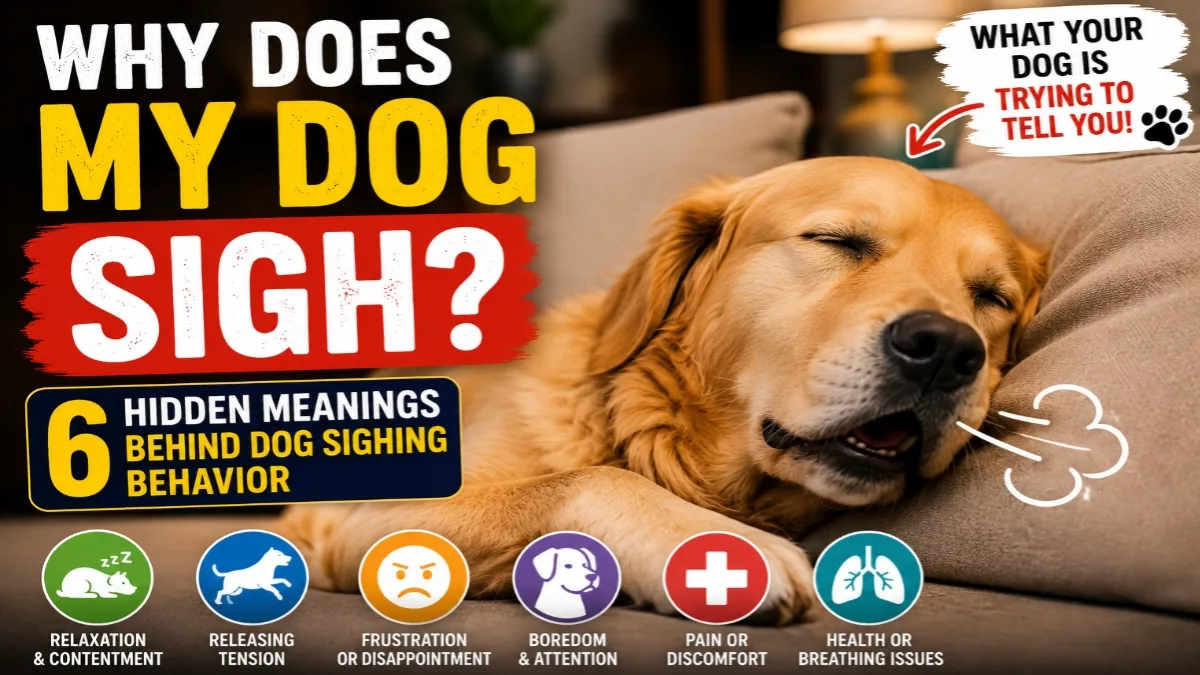

Why Does My Dog Sigh? : Have you ever been relaxing on the couch when your dog suddenly lies down beside you, takes a long deep breath, and slowly lets it out with what sounds like a loud sigh?
Many dog owners immediately wonder if their pet is sad, bored, upset, or even trying to communicate something important. Since humans often sigh when we’re tired, disappointed, or relieved, it’s natural to assume dogs are doing the same thing.
The truth is a little more interesting.
According to canine behavior experts, a dog’s sigh doesn’t always have the same meaning. Sometimes it’s a sign of complete happiness and relaxation. Other times it can show frustration, boredom, or even mild discomfort. The meaning depends on your dog’s body language, facial expression, and what was happening just before the sigh.
If you learn to read these small signals, you’ll understand your dog’s emotions much better and build an even stronger bond.
A Relaxed Sigh Usually Means Your Dog Feels Safe
One of the most common reasons dogs sigh is simple—they’re completely relaxed.
Imagine your dog has just finished dinner, gone for a long walk, played fetch, and now curls up next to you on the sofa. As their muscles relax, they close their eyes and slowly release a long breath.
That gentle sigh is often the canine version of saying,
“Life is good. I’m comfortable, I’m safe, and I can finally rest.”
Behavior specialists believe this type of sigh often appears when a dog feels secure in its environment. There are no threats, no stress, and nothing demanding their attention.
You’ll usually notice a few other signs at the same time:
- Soft, relaxed eyes
- Loose body posture
- Slow breathing
- Calm ears
- No tension in the face
When all these signs appear together, there’s usually nothing to worry about. In fact, it’s one of the best indicators that your dog trusts both you and its surroundings.
Dogs Also Sigh After Physical or Mental Activity
Another completely normal situation is after exercise or playtime.
Maybe you’ve just returned from a long walk, spent twenty minutes playing fetch, or your dog has been running around the backyard. Once the excitement ends, they’ll often lie down and release one long sigh before settling into a nap.
This isn’t a sign of exhaustion or illness.
Instead, it’s the body’s natural transition from an active state into a relaxed one. As the heart rate slows down and adrenaline levels return to normal, the muscles begin to loosen. That deep breath helps the body shift into recovery mode.
Many veterinarians consider this type of sigh to be part of normal canine behavior.
If your dog sighs after exercise, drinks some water, relaxes comfortably, and behaves normally afterward, it’s generally considered a healthy response rather than a cause for concern.
Sometimes a Sigh Means Your Dog Is Feeling Frustrated
Not every sigh is a sign of happiness.
Just like people, dogs can also feel disappointed when something doesn’t go the way they expected.
Imagine you’re preparing dinner in the kitchen. Your dog has been patiently sitting beside you, hoping that a delicious piece of chicken might fall onto the floor. They keep watching every movement you make.
But dinner is served, the food goes onto the table, and your dog doesn’t get a single bite.
A few seconds later, they slowly lower their head, keep their eyes open, and let out one long sigh.
That isn’t random.
It’s often a quiet expression of frustration.
Unlike barking or whining, sighing is a calm way for many dogs to communicate that something they wanted didn’t happen.
You’ll usually notice this kind of sigh together with:
- Eyes staying wide open
- Head resting on their paws
- Watching you closely
- Remaining awake instead of falling asleep
In situations like these, your dog isn’t angry.
They’re simply saying,
“Well… I guess that’s not happening today.”
This type of sigh is surprisingly common in family dogs and is considered a normal part of canine communication.
Your Dog May Be Bored and Looking for Attention
Dogs are social animals.
They don’t enjoy spending long periods doing absolutely nothing, especially intelligent or energetic breeds.
If you’ve been working on your laptop for hours, scrolling through your phone, or watching television all evening, your dog may quietly walk over, lie beside you, and release a dramatic sigh.
Many owners assume their dog is tired.
In reality, they may simply be asking for interaction.
A bored dog often combines sighing with other subtle behaviors.
They may stare at you, bring their favorite toy, gently place a paw on your leg, or walk toward the door hoping you’ll notice the hint.
This is their polite way of saying,
“I’ve been waiting for you. Can we do something together?”
If your dog becomes more cheerful after a short walk, a game of fetch, or even ten minutes of attention, boredom was probably the real reason behind the sigh.
Also Read: If your dog often asks for your attention by touching you, don’t miss our guide on Why Does My Dog Put His Paw on Me? It explains how dogs use physical touch to communicate with their favorite people.
Can Frequent Sighing Be a Sign of Pain or Illness?
Most of the time, sighing is completely normal.
However, if your dog starts sighing much more often than usual, especially along with other unusual symptoms, it could be a sign that something isn’t right.
Dogs are naturally good at hiding pain. Instead of crying or making obvious noises, they often show very subtle changes in their behavior.
For example, an older dog with arthritis may let out a deep sigh every time it lies down or gets back up. A dog experiencing stomach discomfort may sigh repeatedly because it’s struggling to find a comfortable position.
Pay attention if the sighing happens together with:
- Loss of appetite
- Limping or stiffness
- Difficulty standing up
- Sleeping much more than usual
- Restlessness during the night
- Hiding from family members
If you notice several of these signs at the same time, it’s a good idea to schedule a veterinary examination instead of assuming it’s simply normal behavior.
Breathing Problems Can Sometimes Sound Like Sighing
Not every deep breath is actually a normal sigh.
Some respiratory conditions can produce sounds that owners mistake for sighing, especially if the dog has allergies, airway disease, heart disease, or lung problems.
Watch your dog’s breathing carefully.
A healthy sigh usually happens once, followed by relaxed breathing.
But if your dog repeatedly takes deep breaths, breathes heavily while resting, wheezes, coughs, or seems to struggle for air, the situation should not be ignored.
Warning signs include:
- Rapid breathing while resting
- Open-mouth breathing indoors
- Wheezing sounds
- Persistent coughing
- Blue or pale gums
- Difficulty catching their breath
These symptoms require prompt veterinary attention because they may indicate a medical condition rather than normal canine communication.
According to the Merck Veterinary Manual, changes in breathing patterns should always be evaluated alongside the dog’s overall health and behavior, especially if the symptoms appear suddenly or continue for several days.
Related Read: Understanding your dog’s body language becomes much easier when you know how they sleep. You may also enjoy reading Dog Sleeping Positions Meaning, where we explain how different sleeping positions reveal your dog’s emotions and comfort level.
How to Tell What Your Dog’s Sigh Really Means
A sigh by itself doesn’t tell the whole story.
The real meaning comes from your dog’s overall body language. If you only focus on the sound, it’s easy to misunderstand what your dog is trying to communicate.
Before assuming your dog is sad or worried, take a few seconds to observe what they’re doing.
Ask yourself these simple questions:
- Are their eyes closed or wide open?
- Is their body relaxed or stiff?
- Did they just finish playing or eating?
- Are they staring at you while sighing?
- Are they showing any signs of pain or discomfort?
These small details make a huge difference.
For example, if your dog stretches out on the couch after a long walk, closes their eyes, and lets out one deep sigh, that’s usually a sign of complete relaxation.
On the other hand, if they’re sitting in front of you with wide-open eyes, repeatedly sighing while watching you prepare dinner, they’re probably expressing frustration because they expected a treat.
Learning to read these situations will help you understand your dog’s emotions far better than listening to the sigh alone.
Quick Guide: What Does Your Dog’s Sigh Mean?
SituationWhat It Usually MeansWhat You Should Do Lying down with closed eyes and a deep sigh Relaxation and contentment Let your dog rest peacefully Sighing after a walk or play session Releasing physical and mental tension Completely normal behavior Watching you with open eyes while sighing Frustration or disappointment Give attention if appropriate, but don’t reward begging Repeated sighing while appearing bored Wants interaction or mental stimulation Play, train, or take your dog for a walk Frequent sighing with limping or stiffness Possible pain or discomfort Schedule a veterinary check-up Sighing with heavy breathing or coughing Possible respiratory issue Seek veterinary advice as soon as possible
If your dog starts sighing much more often than usual, struggles to breathe, shows pain while lying down, or the behavior suddenly changes, it’s a good idea to consult your veterinarian. You can also learn more about canine health and behavior from the Merck Veterinary Manual.
Conclusion
If you’ve ever wondered why your dog sighs, the answer isn’t always the same.
Sometimes it’s the sound of complete happiness after a long day. Sometimes it’s a quiet expression of boredom or frustration. And in a few cases, frequent sighing may signal discomfort that deserves medical attention.
The key is to look beyond the sigh itself.
Watch your dog’s eyes, posture, breathing, and the situation they’re in. When you understand the full picture, you’ll be able to respond in a way that keeps your dog happy, healthy, and emotionally secure.
The better you understand these small behaviors, the stronger the bond between you and your four-legged companion becomes.
FAQ
Why does my dog sigh so much?
Most dogs sigh because they feel relaxed, content, or are releasing tension after activity. However, frequent sighing with other symptoms may indicate pain or illness.
Is dog sighing normal?
Yes. Occasional sighing is a completely normal part of canine communication and is often associated with comfort, relaxation, or mild frustration.
Why does my dog sigh when lying next to me?
A dog that sighs while resting beside you usually feels safe, secure, and comfortable. It’s often a sign of trust and emotional contentment.
Can a dog sigh because of stress?
Yes. Dogs sometimes sigh after stressful situations like vet visits, grooming, or loud noises as their body relaxes and releases tension.
When should I worry about my dog’s sighing?
If your dog sighs frequently along with coughing, heavy breathing, loss of appetite, limping, or other unusual symptoms, consult your veterinarian for a proper examination.