
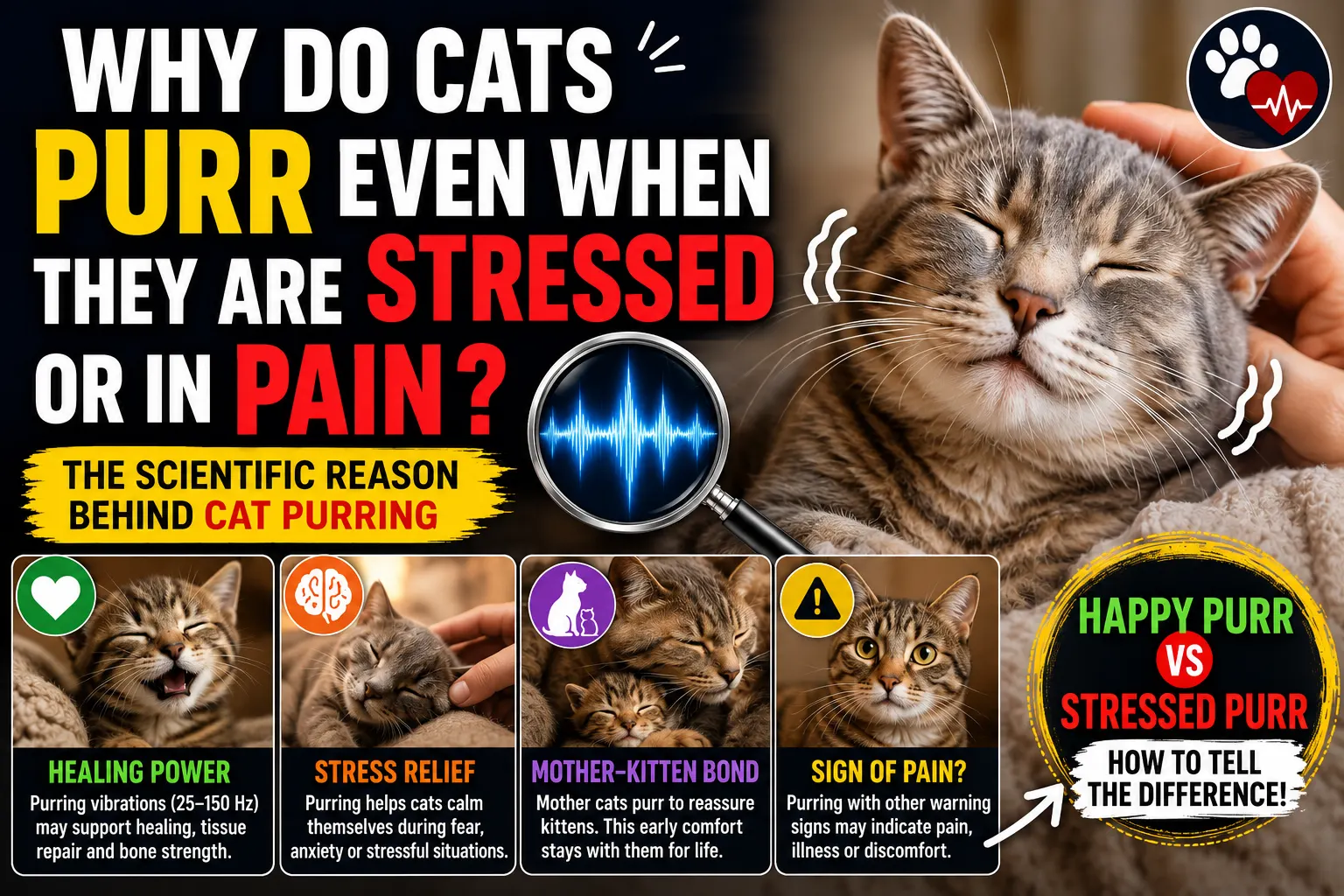

Most people believe that a purring cat is a happy cat. That’s true in many situations, but it isn’t the whole story.
Have you ever noticed your cat purring while hiding under the bed, sitting quietly at the veterinary clinic, or even after getting injured? At first, it feels confusing. If your cat is scared, sick, or in pain, why would it make the same soothing sound it uses while relaxing on your lap?
This question leaves many cat owners searching for answers. In fact, why do cats purr when they are stressed is one of the most common feline behavior questions discussed by veterinarians and cat behavior specialists.
The truth is that purring isn’t simply a sign of happiness. It serves several important biological functions, including communication, emotional regulation, and possibly even physical healing. Cats may purr when they’re content, but they can also purr to comfort themselves during stressful situations or while coping with illness or discomfort.
Understanding this behavior helps cat owners recognize when purring is a positive sign and when it may actually indicate that a cat needs extra attention or veterinary care.
Cats May Use Purring as a Natural Healing Mechanism
One of the most fascinating theories behind why do cats purr when they are stressed involves the healing effects of the purring vibration itself.
Researchers have found that a cat’s purr typically falls within a frequency range of approximately 25 to 150 Hz. Interestingly, similar vibration frequencies have been studied for their potential role in supporting bone strength, tissue repair, muscle recovery, and reducing inflammation.
While scientists continue to study the exact relationship, many veterinary experts believe that purring may act as a built-in recovery system that helps cats conserve energy while supporting their bodies during healing.
This may explain why injured or recovering cats often continue to purr even when they don’t appear happy.
Possible benefits associated with purring include:
- Supporting bone and tissue recovery.
- Helping muscles relax after injury.
- Reducing physical stress on the body.
- Conserving energy during healing.
- Promoting overall recovery while resting.
Instead of viewing purring as only an emotional response, many experts now consider it a complex biological behavior that may help cats recover from physical challenges more efficiently.
Purring Can Help Cats Cope With Pain and Stress
Another important reason behind why do cats purr when they are stressed is emotional self-regulation.
Just as people may take deep breaths, hum quietly, or hug themselves during stressful moments, cats appear to have their own calming mechanism. Purring may help them stay emotionally balanced when they feel frightened, anxious, or uncomfortable.
Many cats begin purring in situations that most owners would never associate with happiness.
For example, you may hear purring when your cat is:
- Waiting at the veterinary clinic.
- Recovering after surgery.
- Feeling anxious during thunderstorms.
- Adjusting to a new home.
- Meeting unfamiliar people or animals.
In these situations, the purr isn’t necessarily saying, “I’m happy.” Instead, it may be your cat’s way of reducing stress and creating a sense of comfort during an unsettling experience.
Because of this, it’s always important to observe your cat’s entire body language, not just the sound of the purr. A relaxed posture, soft eyes, and a loose tail usually indicate contentment, while flattened ears, a tense body, hiding, or refusing food may suggest that your cat is using purring to cope with fear or discomfort rather than expressing happiness.
Understanding this distinction can help you respond appropriately and recognize when your cat may need reassurance or professional veterinary care.
Also Read:
- Does Your Cat Trust You Completely? 13 Clear Signs Every Cat Parent Should Know
- Cat Tail Wagging Meaning: What Your Cat’s Tail Is Really Trying to Tell You
- Why Does My Cat Bite Me Gently? Understanding Cat Love Bites and What They Really Mean
Mother Cats Use Purring to Comfort Their Kittens
One of the earliest reasons cats learn to purr begins immediately after birth.
Newborn kittens are born with their eyes closed and their vision is extremely limited during the first days of life. They depend almost entirely on touch, warmth, smell, and vibration to stay close to their mother.
This is where purring becomes incredibly important.
Mother cats often purr while nursing their kittens, grooming them, or resting nearby. Those gentle vibrations help kittens recognize that their mother is close and that they are safe.
For young kittens, purring acts almost like a comforting signal that says everything is okay.
As kittens grow, they continue using the same behavior throughout adulthood. Many feline behavior experts believe this early association explains why do cats purr when they are stressed later in life.
When adult cats experience fear, pain, or uncertainty, they may instinctively return to the same soothing behavior they relied on as kittens.
This is why stressed cats often purr when they are:
- Being examined by a veterinarian.
- Recovering from illness or injury.
- Feeling lonely or anxious.
- Entering an unfamiliar environment.
- Seeking comfort from a trusted person.
Rather than being a sign of happiness alone, purring may represent one of the oldest emotional coping mechanisms that cats develop during the earliest stages of life. It remains an important part of feline communication from kittenhood through adulthood.
How to Tell the Difference Between a Happy Purr and a Stress Purr
One of the biggest mistakes cat owners make is assuming that every purr means their cat is happy.
In reality, the sound itself isn’t enough to understand what your cat is feeling. To correctly interpret why do cats purr when they are stressed, you need to observe your cat’s entire body language and behavior.
A Happy Purr Usually Looks Like This
When your cat is truly relaxed, you’ll often notice several positive signs together:
- Soft, half-closed eyes.
- Relaxed ears facing forward.
- Loose, comfortable body posture.
- Gentle kneading or slow blinking.
- Normal eating, grooming, and playful behavior.
In this situation, the purring is most likely expressing comfort, affection, and trust.
A Stress or Pain Purr Often Comes With Warning Signs
If your cat is purring while also showing unusual behavior, don’t assume everything is fine.
Watch for signs such as:
- Hiding in unusual places.
- Flattened ears.
- A stiff or tense body.
- Dilated pupils.
- Loss of appetite.
- Heavy breathing or lethargy.
- Limping or avoiding movement.
When these symptoms appear alongside purring, your cat may be trying to comfort itself while dealing with stress, pain, or illness.
If the purring continues for an extended period or is accompanied by changes in eating, drinking, mobility, or behavior, it’s safest to schedule a veterinary examination. Early diagnosis can make a significant difference if an underlying medical condition is present.
Conclusion
Purring is one of the most fascinating behaviors in the feline world. While many people associate it with happiness, the truth is far more complex.
As we’ve explored, why do cats purr when they are stressed has both emotional and biological explanations. Cats may purr when they’re relaxed and affectionate, but they can also use the same behavior to calm themselves during fear, anxiety, pain, illness, or recovery. Some researchers even believe that the unique vibration of a cat’s purr may support healing and tissue repair.
For cat owners, the most important lesson is simple: never judge your cat’s emotions by the purring sound alone.
Always pay attention to body posture, ear position, facial expressions, appetite, and overall behavior. A relaxed cat that purrs while cuddling is very different from a cat that’s hiding, refusing food, or showing signs of discomfort while purring.
The better you understand these subtle signals, the easier it becomes to recognize when your cat simply wants affection—and when it may actually need your help or a visit to the veterinarian.
Continue Learning About Cat Behavior
Want to learn more about feline purring, stress, and cat health from trusted veterinary experts? The following evidence-based resources provide reliable information for cat owners and can help you better understand your cat’s behavior.
Recommended External Resources:
- International Cat Care — https://icatcare.org
- Cornell Feline Health Center — https://www.vet.cornell.edu/departments-centers-and-institutes/cornell-feline-health-center
- American Association of Feline Practitioners (AAFP) — https://catvets.com
FAQ
Why do cats purr when they are stressed?
Cats may purr when they are stressed as a self-soothing behavior. Purring can help them stay calm during fear, anxiety, pain, illness, or unfamiliar situations.
Can a sick cat still purr?
Yes. A sick or injured cat may continue to purr even when it is in pain. Purring does not always mean a cat is happy, so always observe other signs such as appetite, body posture, and energy levels.
Does purring mean my cat is happy?
Not always. Cats often purr when they are relaxed and content, but they can also purr while feeling stressed, frightened, or recovering from an injury. Body language provides important clues about your cat’s emotional state.
How can I tell the difference between a happy purr and a stress purr?
A happy purr is usually accompanied by relaxed body language, soft eyes, and normal behavior. A stress purr may occur alongside hiding, flattened ears, loss of appetite, tense muscles, or signs of illness.
Should I take my cat to the vet if it keeps purring?
If your cat is purring continuously while showing unusual symptoms such as hiding, refusing food, limping, difficulty breathing, or lethargy, you should contact your veterinarian for a proper examination.