
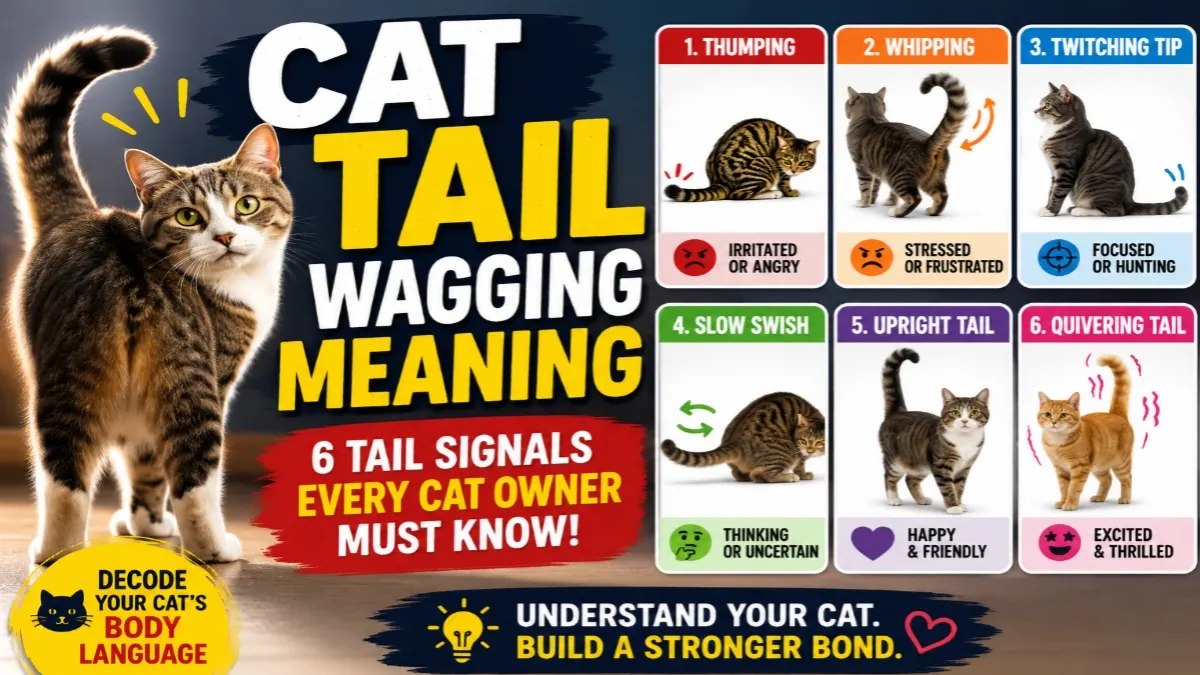

Cat Tail Wagging Meaning: If you’ve ever lived with both a cat and a dog, you’ve probably noticed one important difference. When a dog wags its tail, it usually means excitement, happiness, or a friendly invitation to play. Cats, however, communicate very differently. Assuming that a wagging cat tail means the same thing can easily lead to scratches, bites, or a very confused pet owner.
So, what does cat tail wagging mean?
The answer depends entirely on how the tail is moving. In feline body language, the tail is one of the most expressive parts of the body. A slow swish, a rapid flick, a vibrating tail, or a stiff upright position can all send completely different messages. Learning to read these signals is one of the easiest ways to understand your cat’s emotions before they react.
Many first-time cat owners wonder why their cat starts wagging its tail while being petted. Others notice their cat flicking its tail while watching birds through the window or thumping it against the floor during cuddle time. These behaviors aren’t random—they’re all forms of communication.
In this guide, you’ll learn the real cat tail wagging meaning, discover why cats use their tails differently from dogs, understand the emotions behind different tail movements, and know exactly how to respond in each situation.
A Thumping Tail Usually Means Your Cat Has Had Enough
One of the most misunderstood signals in feline body language is a tail that repeatedly thumps against the floor.
If your cat is lying beside you while you’re petting it and the tail suddenly starts hitting the ground with increasing force, don’t mistake it for excitement. In most cases, this movement is a warning.
Behavior experts often explain this as a sign of irritation or overstimulation. Your cat may have enjoyed being stroked a few moments earlier, but now its sensitive nervous system has reached its limit.
Instead of walking away immediately, many cats give clear warnings first.
A thumping tail often means:
- Your cat is becoming annoyed.
- Petting has continued for too long.
- Your cat wants some personal space.
- A bite or scratch could happen if the warning is ignored.
Understanding this part of cat tail wagging meaning can help prevent many accidental cat bites. When you notice the tail beginning to thump, it’s usually best to stop petting and give your cat a chance to relax on its own.
also read: Does Your Cat Trust You Completely? 13 Clear Signs Every Cat Parent Should Know
A Fast-Swinging Tail Often Signals Stress or Frustration
Another important part of understanding cat tail wagging meaning is recognizing the difference between a gentle tail movement and a rapid, forceful one.
When a cat swings its tail quickly from side to side, almost like a whip, it’s usually experiencing strong emotions rather than happiness. Unlike dogs, cats rarely wag their tails enthusiastically because they’re excited to see someone.
A rapidly moving tail often indicates that your cat is mentally overwhelmed or highly alert.
This behavior commonly appears when:
- Another cat is outside the window.
- A stranger or unfamiliar pet enters the house.
- Loud noises make your cat uncomfortable.
- Your cat feels trapped or cornered.
- Something has interrupted its routine.
During these moments, you’ll often notice other body language signals as well. The ears may rotate backward, the pupils become larger, and the body becomes stiff. Together, these signs tell you that your cat isn’t in a relaxed mood.
If you see this type of tail movement, avoid trying to pick up or cuddle your cat. Giving it space is usually the best response until it feels calm again.
A Twitching Tail Tip Means Your Cat Is Completely Focused
Not every tail movement is negative.
Sometimes only the very end of your cat’s tail twitches while the rest of the body remains perfectly still. This is one of the easiest forms of cat tail wagging meaning to recognize once you know what to look for.
A gently twitching tail tip usually means your cat is concentrating intensely.
You may notice this when your cat is:
- Watching birds through a window.
- Tracking an insect across the floor.
- Staring at a toy before pouncing.
- Listening carefully to a faint sound.
- Preparing to investigate something interesting.
At this moment, your cat has entered hunting mode. Even though indoor cats no longer need to hunt for food, their natural instincts remain incredibly strong.
If your cat’s tail tip is twitching while it watches something, avoid distracting it. This focused behavior is completely normal and reflects the instincts that have been part of feline survival for thousands of years.
A Slow Swishing Tail Shows Your Cat Is Thinking Before Acting
Sometimes a cat moves its tail slowly from side to side instead of flicking it rapidly. This gentle swaying often happens when the cat is carefully deciding what to do next.
Understanding this subtle cat tail wagging meaning helps you recognize when your cat is mentally engaged rather than upset.
You may notice this behavior when your cat is:
- Crouching behind furniture while watching a toy.
- Slowly approaching another cat.
- Looking at a bird outside the window.
- Preparing to jump onto a shelf.
- Deciding whether to chase moving prey.
At this stage, your cat is calculating distance, timing, and movement. Every muscle is ready, but the brain is still making the final decision.
This slow tail movement is part of your cat’s natural hunting instinct and isn’t usually a sign of aggression. Interrupting your cat at this moment may simply break its concentration.
An Upright Tail Is One of the Happiest Signs in Feline Body Language
If you’re looking for the most positive cat tail wagging meaning, pay attention to an upright tail.
When your cat walks toward you with its tail standing straight up, especially if the tip curves slightly like a question mark, it’s expressing confidence, friendliness, and trust.
This is one of the clearest signs that your cat is happy to see you.
Cats commonly display this tail position when they:
- Greet you after you come home.
- Walk over expecting affection.
- Follow you around the house.
- Feel safe in their environment.
- Approach people they trust.
Kittens often greet their mothers with an upright tail, and many adult cats continue using the same body language with their favorite humans throughout life.
If your cat approaches you this way, it’s usually a perfect time to pet it, talk softly, or enjoy some playtime together. An upright tail is one of the strongest indicators of a relaxed and emotionally secure cat.
A Quivering Tail Shows Extreme Excitement
One of the happiest forms of cat tail wagging meaning is a tail that stands upright and vibrates rapidly.
This movement is very different from nervous tail flicking. Instead of swinging from side to side, the tail remains vertical while trembling slightly from the base to the tip.
Cats often display this behavior when they’re overwhelmed with positive emotions.
You may notice a quivering tail when:
- You arrive home after being away.
- It’s time for your cat’s favorite meal.
- Your cat sees a favorite person.
- You’re about to open a bag of treats.
- Your cat is excited during a positive interaction.
Many owners mistake this movement for fear because of the shaking, but in most cases it’s actually one of the strongest signs of happiness and anticipation.
However, if a quivering tail is accompanied by urine spraying against vertical surfaces, it may be related to scent marking rather than excitement. If this becomes frequent, discussing the behavior with your veterinarian is a good idea.
Conclusion
Learning cat tail wagging meaning can completely change the way you understand your cat’s emotions. Unlike dogs, cats don’t usually wag their tails simply because they’re happy. Every movement tells a different story.
A tail thumping against the floor often signals irritation. A fast-swinging tail may indicate stress or frustration. A twitching tail tip usually reflects intense focus, while a slow swish shows careful concentration before action. On the other hand, an upright tail or a gently quivering tail is one of the clearest signs that your cat feels happy, confident, and safe around you.
The more you observe your cat’s tail alongside its ears, eyes, posture, and facial expressions, the easier it becomes to understand what it’s trying to communicate. Over time, reading these subtle signals will strengthen your bond and help you respond to your cat in ways that build lasting trust.
Want to understand feline body language from trusted veterinary and cat behavior experts? These evidence-based resources explain cat tail language, communication, and common feline behaviors in greater detail.
Helpful Links:
International Cat Care – https://icatcare.org
Cornell Feline Health Center – https://www.vet.cornell.edu/departments-centers-and-institutes/cornell-feline-health-center
American Association of Feline Practitioners (AAFP) – https://catvets.com
FAQ
What does cat tail wagging mean?
Cat tail wagging can indicate different emotions depending on how the tail moves. It may signal irritation, excitement, curiosity, hunting focus, or happiness. Unlike dogs, a wagging tail doesn’t always mean a cat is happy.
Why does my cat wag its tail while I pet it?
If your cat starts wagging or thumping its tail while you’re petting it, it may be feeling overstimulated. This is often a warning that your cat has had enough attention and would like some space.
Why is my cat’s tail standing straight up?
A cat with its tail held straight up is usually feeling confident, friendly, and happy. This tail position is one of the strongest signs that your cat trusts you and enjoys your company.
What does it mean when only the tip of my cat’s tail twitches?
A twitching tail tip usually means your cat is highly focused. Cats often do this while watching birds, insects, or toys because their hunting instincts are activated.
Is a fast-moving cat tail a sign of anger?
A rapidly swishing tail often indicates irritation, frustration, or stress. If it’s combined with flattened ears, dilated pupils, or a stiff body, it’s best to give your cat some space.